This most recent trip home had me jet-setting between 3 countries: Japan, Taiwan and Canada in order to reach the United States. However, despite the painstaking travel time to reach my final destination, the layover in Taiwan and an opportunity to touch base with some friends in Vancouver, B.C., Canada made the extra travel time worth it! This year’s trip home was great! The weather in Seattle was beautiful everyday and I had an opportunity to spend some good quality time with all my friends and family! I also spent 5-nights in Madison, Wisconsin for a Tibetan event called Tenshug, the Long Life Celebration for His Holiness the Dalai Lama. This event included 4-days of spiritual teachings by the Dalai Lama followed by the long life prayer offering to him calledTenshug. This Tenshug in the United States was the first time such an event has been held in the Western Hemisphere and drew thousands of people from all across North America. As for the city of Madison, Wisconsin – this was one of the nicest small cities I’ve ever visited in the United States! Madison is the capital of Wisconsin state and is also home to the University of Wisconsin–Madison. In 1996 Money magazine named Madison as the best place to live in America. When making a trip to Madison, a day and night stroll on State Street is absolutely necessary. State Street links the University of Wisconsin campus with the State Capitol square, and is lined with restaurants, espresso cafes, bars, and shops. Check out all my pictures from my 2008 trip home in my albums:
Trip Home 2008 and Madison 2008 (Tenshug)!
Recently I returned to Japan from a great 2-week trip home to the United States to visit my family and friends! This trip had many memorable moments, but I’ll start by sharing my experiences from an 8-hour layover I had in Taipei City, Taiwan. With only 8-hours in Taiwan, I tried to make the most of my transit time rather than wait at the airport for my connection. After arriving in Taiwan, I quickly moved through Taiwanese immigration and to the airport information desk, where I was given all the necessary maps and flyers for a short trip downtown. At the airport bus stop, I met two Japanese surfers heading to Bali on an overnight layover looking to do some sightseeing as well. Together we made the 1-hour commute downtown in a double-decker bus with no air conditioning. Clearly we were no longer in Japan as the bus driver was smoking in the bus and the level of service and hospitality had taken a dip. Nevertheless, my overall first impressions of the Taiwanese people were extremely positive! At 509.2 meters (1,670.60 ft) from the ground to its highest architectural point, I visited the tallest building in the World. After a trip to the top, my Japanese surfer buddies and I made short visit to a Taipei City Night Market for some Taiwanese cuisine! Check out the video below and my picture album, Taiwan 2008 for a look at my 3-hour trip in Taiwan!
Last Saturday night I was invited by my student Toru and his wife Yoko to attend Night & Day (N&D) Bar’s 7th Anivesary Bar Opening Event in Tokushima City. N&D is a live music event bar where musicans and singers perform weekly. On the night of the anniversary event, Toru played the guitar while his friend sang a Japanese Enka song. Enka is a genre of Japanese music similar to American country or folk music. Also performing was Toru’s wife Yoko, who sang two English songs, including Fly me to the Moon. Followed by my house rocking performance of Tears in Heaven by Eric Clapton on the Anpanman guitar! Check us out on the video!
Written by Chiharu Mori / Yomiuri Shimbun Correspondent
NOTTINGHAM, England — The Dalai Lama, who is currently visiting Britain, on Sunday expressed his appreciation of Prime Minister Yasuo Fukuda’s series of remarks on Tibet, in an exclusive interview with The Yomiuri Shimbun. “We very much appreciate them,” the Dalai Lama said in the interview in this city in central England. The exiled Tibetan spiritual leader also urged Japan to send further clear messages to China with regard to human rights issues. “If you are a close friend [of China], it is important to make clear your friend’s mistake,” the Dalai Lama said. The Dalai Lama also said he planned to visit Japan around November, after the Beijing Olympics. When Chinese Foreign Minister Yang Jiechi visited Japan in April, Fukuda reportedly told Yang that China has to “squarely face the reality that the situation in Tibet has become an international issue.” In his meeting with Chinese President Hu Jintao in Tokyo in May, Fukuda asked Hu to make further efforts to dispel the concerns of the international community over the issue. The Dalai Lama welcomed the Japanese government’s firm stance against China, which insists that the Tibet issue is an internal affair, saying Fukuda’s comments “were helpful to make clear some mistakes, wrong policy carried out by the Chinese government.”
On behalf of all Tibetans around the world, thank you Japan for your continued support!
(チベットを支援してくださっている日本の皆さんありがとうございます。そして、引き続き変わらぬ支援よろしくお願いします。)
This past Sunday, I ran in the Japanese Self-Defense Force Marathon in Matsushige, Tokushima. The J.S.D.F. is the military force in Japan established after the end of the post-World War II American occupation of Japan. For most of the post-war period, the defense force was confined to the islands of Japan and not permitted to be deployed abroad. In recent years, they have been engaged in international peacekeeping operations, including a controversial humanitarian tour of duty in Iraq. The J.S.D.F. Marathon falls far short of a full marathon of 42.195 km or 26 miles; however, these local “fun-run” events in Japan are widely referred to as “marathons,” not to mention it sounds professional to us novice runners… Although I don’t enjoy running for exercise, these runs are great for conditioning… As I do every year following the beginning of Spring, I make a strong push to get in shape for Tibetan basketball tournaments I play in annually back home. This summer my team will be gunning for our 7th North American Tibetan basketball championship in Madison, Wisconsin (U.S.A.). More on that after I return from my trip home in July! Back to the J.S.D.F. Marathon… this event was a 10 km run on the Matsushige base with approximately 300 hundred runners… The competition was stiff this year, but through perseverance and a lot of determination I was able to win first place!!.. barely edging out two wonder sisters who gave me a real run for my money… See the award ceremony picture below! More pictures in my Tokushima Sports album!
Another Golden Week has come and gone, which means it’s officially back to work for me tomorrow… As I’ve written before, Golden Week is a string of Japanese national holidays from April 29 to May 6, in which many in Japan enjoy several consecutive days off from work. This Golden Week I decided to get away from it all by going to Ikumi beach in the little town of Toyo for a little rest and relaxation under the sun. Ikumi beach is located 2-hours south of Tokushima City near the Tokushima/Kochi prefecture border and is popular for being a surfing beach. Tokushima is home to seven public kaisuiyokujou (swimming beaches or seaside resorts), and several surfing beaches. Shikoku Island is home to some of Japan’s best surf, the beaches face right into seasonal oncoming typhoons, have warm water, are not too crowded; and have a huge variety of reef, beach and river mouth breaks for surfing enthusiasts. In 1997 Ikumi beach hosted the Tokushima Pro Surfing World Championships – won by 8 time world champion, Kelly Slater. Although I don’t surf, I prefer surfing beaches to take in the sun, because there’s nothing more relaxing then having a cooler full of beer, a beach lounge chair, and a front row seat to some great surfing theater for entertainment… the next best thing to being courtside…
2x Olympic Champion and 6x Tibetan Basketball Champion!
Again, another long over due update to MY LIFE AND TIMES… As I always do when someone comes to Japan to visit me, I like to write a special thank-you blog to them… and this one goes out to my good friend Lob from Portland, Oregon who came to Japan for 3-weeks in December through the New Year to visit!.. In that time in December, Lob arrived during Bon-enkai season, a Japanese tradition in which co-workers, friends, and various associations celebrate the end of the year by having a party. Lucky for Lob, he was able to experience this tradition first-hand by attending a few of my class Bon-enkais.. Although his visit was months ago, the memory of his trip lives strong through conversations with my students who from time to time ask, how’s Lob doing… Lob and I spent several days in Tokushima and Osaka, while also visiting Kobe and Kyoto! Going out in Kobe and ringing in the New Year in Osaka was by far the highlight! The low-light was Lob’s vegetarian diet he started 2-months before coming to Japan, in Japanese they have have a word for that, “mendokusai” – look it up!… Thanks Lob for making the trip!
Dontonbori Bridge in Osaka
On August 16th, I visited Mt. Koya in order to complete my Shikoku 88 Temple Pilgrimage. Okunoin Temple on Mt. Koya is the exact site where the body of Kobo Daishi was buried, and where he continues to rest in the state of Samadhi (eternal resting) inside the shrine of the temple. After delivering his last will at the age of 62, Kobo Daishi went into eternal meditation on March 21, 835 – as he predicted his last day on earth would be. Pilgrims who have completed the Shikoku 88 Temple Pilgrimage are required to make a benedictory report to the Daishi, thus marking the end of their journey. However, it is not uncommon for pilgrims to return to do the pilgrimage again. When asked, ‘why do the pilgrimage so many times?’ Most answer the same way, ‘there is unlimited joy in the life of a Henro, because the Savior Odaishi-san (Kobo Daishi) is still alive here saving us, and with us on Shikoku Island.’ Kobo Daishi is believed to be living at Okunoin Temple, tirelessly striving to give aid to all beings, offering hope for sacrifice.
“After I am no more,
My home is still on Mt. Koya.
While my mind will be eased in the Tusita Heaven,
I will check your devotional faith.
Without ceasing my appearance on earth,
Especially at the Sacred Places:
Where I was born… took esoteric discipline…
Attained enlightenment… and where I entered to the Samadhi”
— Kobo Daishi
As I’ve written about numerous times in the past, from August 12-15 each year, Tokushima prefecture hosts the largest dance festival in Japan called the Awa Odori Festival. If you were ever planning on visiting Tokushima, there is absolutely no better time to visit then during these 4-days in the summer! As I do every year, I participated in the festival by dancing with a niwaka-ren (meaning a group that doesn’t practice and just goes out and wings-it after a few Asahi beers). This year I danced with the Tokushima International Association (T.I.A.) group with some friends and students! Check out the video!
On August 11th, I took a 3-hour train ride to Kochi City to check-out the Yosakoi Festival. Not too far from Tokushima, Kochi prefecture is home to another dance festival called the Yosakoi Festival. Unlike the Awa Odori Festival in Tokushima, Yosakoi has a relatively short history dating back to 1954. During the 1954 recession in Japan, the festival was proposed and promoted mainly on the initiative of the local Chamber of Commerce as a means of dispelling the gloom and encouraging the local people. Every year for four days from August 9-12, the Yosakoi Festival dancers swarm the city of Kochi. In the local dialect "Yosakoi!" means "Come on over tonight!" Each of the participating groups orchestrates their own dance performance at various places in the city’s downtown commercial districts. The festival currently features roughly 15,000 dancers in about 130 groups.
Dance groups must follow two basic rules that state the participating teams must use the Yosakoi Naruko Odori Uta, or the dancing song, which is based on "Yosakoi Bushi," the traditional local folk tunes and that all the dancers must perform while holding clappers, which makes a sound similar to a castanet. Teams are free to wear whatever costumes they like and any style of dancing is allowed. In recent years, young people have begun incorporating other musical genres into their performances, including rock, hip-hop, samba, and reggae. This was a fun festival to watch and it was clear that all the dance groups had worked hard on their performances – however, when the Awa Odori dance festival is in your backyard, it’s hard to appreciate the differences. The Awa Odori dance festival dates back over 500 years, where as the Yosakoi recently celebrated its 54th anniversary only. Also, there are many opportunities for spectators to try the basic movements of the Awa Odori dance with various dance groups. However, with no traditional dance style, Yosakoi is purely a spectator festival it appeared. Despite having to be compared to one of the largest dance festivals in all of Japan 3-hours away in Tokushima, the Yosakoi is definitely worth checking out! But bring some earplugs if you want to catch the action up close, because each group is led by an odd massive van that blast music at a deafening volume!
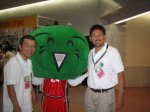
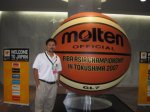
From July 28 to August 5, I volunteered at the 2007 FIBA Asia Championships held in my backyard of Tokushima City. This past week has been a very fun experience for me, I met many great people living in Tokushima volunteering who could speak English and I was able to catch some of the action courtside! According to my volunteer I.D. pass, I was an interpreter, but with so many more fluent Japanese interpreters, my minimal skills were rarely called upon. I was the only foreigner in the interpreter group, so everyone cut me a lot of slack to just enjoy myself. I spent most of the time talking with other volunteers at the help desk and courtside checking credentials. There were a total of 16 countries in the tournament, including China, Jordan, Iran, the Philippines, Lebanon, Kuwait, the U.A.E., Quatar, India, Kazakhstan, Indonesia, Korea, Hong Kong, Syria, Taiwan, and Japan. With China being the host country of next year’s Olympics, they had an automatic bid into the Summer Games, so they sent their “B” Team to the tournament who had no chance. With only one Olympic birth available, the competition was heated despite not many people attending the games. One of the games that I was able to watch while not volunteering was Japan v.s. Korea, which Japan lost 93-83. Not surprisingly, basketball takes a very back seat to baseball in Japan, and despite Yuta Tabuse recently becoming the first Japanese to play in an NBA game, the momentary feat has not been enough to win-over Japanese sports fans. Nevertheless, I thought the Japanese team played with a lot of heart and it was disappointing to see them lose. Interestingly, the Japanese team features one recently naturalized citizen, J.R. Henderson – who played for U.C.L.A.’s 1995 N.C.A.A. National Championship Team and was drafted 27th by the Vancouver Grizzlies in the 2nd Round of the 1998 NBA Draft. J.R. Henderson now goes by the name of “Sakuragi J.R.” and is playing professional basketball in Japan. I got a picture with him, check that out below! In the end, Iran beat Lebanon 74-69 to secure their first birth to the Olympics in the sport of basketball. The third place team was Korea and Japan finished 8th overall.
Check out all my pictures below!
Once again my basketball team has won another Tibetan Basketball Championship. This year the tournament was held in Seattle, WA and marks the 6th North American Championship my team representing Portland, Oregon has won. Check out the highlight video!!
Well, I’m now back in Japan after a refreshing 2-weeks back home… I could probably write forever about all the things I did, however, I’ll focus on the celebration of the 4th of July for now, America’s Independence Day – the ever-popular holiday that coincided with my trip home this year. This cultural exchange blog is for my Japanese students and friends who have never experienced this American holiday.
America celebrates the 4th of July as Independence Day because it was on July 4th, 1776 that members of the Second Continental Congress met in Philadelphia and adopted the final draft of the Declaration of Independence – a document officially declaring separation from Great Britain, thus resulting in the birth of the United States of America. Celebrating Independence Day is impossible without fireworks, an American tradition. While back home, I went to the fireworks show at Gasworks Park, the most popular place in Seattle to take part in the festivities. Check out my video below of the fireworks show at Gasworks Park in Seattle!
This past Sunday, I completed my nearly 4-year journey of the Shikoku 88 Temple Pilgrimage! This journey took me over 1400 km (over 900 miles) to complete and required several visits to the remote corners and mountains of Tokushima, Kochi, Ehime and Kagawa prefectures. It is written in Japanese literature that human beings have always had a fascination with nature, the unknown country and the mystical encounter of a great savior. The people of Japan believe there is no better place where one can travel along the island in such isolation and fulfill these inner curiosities than by visiting the historical temples and following in the footsteps of Kobo Daishi, the founder of 88 Temple Pilgrimage and Japanese Buddhism. For over 1000 years, pilgrims have made this journey around Shikoku Island in hopes of achieving everlasting enlightenment. Embarking on this journey I believe takes you back in time to a more quiet, ancient ambiance of an old country often lost in the modern day image of Japan. There are many reasons why people attempt to do the pilgrimage and can vary depending on one’s individual incentive, desire, and wishes. There are several types of inner motivations involved in the Shikoku pilgrimage: first of all, sightseeing among natural scenic wonders such as whirlpools, the Inland Sea, stalactite caves, deep gorges, soaring mountain cliffs, and panoramic views of the coastline; secondly, praying for the quick recovery from a prolonged illness; thirdly, memorial prayer for the eternal peace of a passed family member; fourthly, liberation from the bondage of family and business struggles; fifthly, seeking enlightenment through the knowledge of the Shingon esoteric tradition. My personal motivation includes some of these elements, but moreover, I believe my placement on this island was more than just random luck. Being a Tibetan-American and placed on an island, home to the most famous Japanese buddhist pilgrimage – this was a sign I felt necessary to appreciate. Although I have completed my visit to all 88 Temples, the journey is unfulfilled until a visit is made to Okunoin Temple on Mt. Koya in Wakayama. This is the place where Kobo Daishi went into eternal meditation and where all pilgrims are required to pay respect before concluding their pilgrimage. I plan to make this trip this summer. Until then, this chapter in MY LIFE AND TIMES IN JAPAN is not fully concluded…
Note: Picture of me standing in front of Okuboji Temple, number 88 – the last temple on the pilgrimage.
This next blog is dedicated to Udon, one of my favorite Japanese foods because of its simplicity and taste. The popular wheat based noodle is served in many different ways, both hot and cold. There is no where in Japan more famous for its udon then in Kagawa. Located north of Tokushima and also on the island of Shikoku – Kagawa was once known as Sanuki. Thus, the old name of the province stuck with the locally made udon. Ironically, the origin of udon is credited to none other than Kobo Daishi. According to historians, the founder of the 88 Temple Pilgrimage traveled to China in the 9th century to study buddhism. When he returned, he also brought back the knowledge of udon to his farming neighbors in the Sanuki region of Japan. As experts in refining imported culture, udon has come to be recognized in the world as Japanese food today. In recent year’s the popularity of the food has even inspired the making of a Japanese movie about Sanuki Udon shot in Kagawa ken – appropriately titled, Udon. On my recent trips to Kagawa to visit the 88 Temples in its prefecture, I’ve made a conscious effort to consume as much Sanuki Udon as I can. With over 1000 Sanuki Udon restaurants in the prefecture, I’ve avoided all chain establishments and have tried to visit only the “mom and pop shops.” Let me tell you… there’s nothing more satisfying than granny bringing a home-made bowl of udon to your table after a long day of temple visiting. It’s like she knows you’ve earned it… Check out my gallery below of Sanuki Udon restaurants I’ve visited in Kagawa.
Yesterday I returned from an exhausting day on the 88 Temple Pilgrimage in which I visited temples 72-82. This day trip to 11 temples included three meals of Sanuki udon, the local udon of Kagawa ken which is famous in Japan. I plan to write a blog specifically devoted to these noodles that I have come to love another time, but for now let me update you where I officially stand on my pilgrimage journey. Having completed all the temples in Tokushima, Kochi and Ehime; I am now circling back east in Kagawa towards the end of my nearly four year journey. Kagawa is located north of Tokushima and my day’s starting point from temple 72 took about 1 and half hours to reach by car yesterday morning. In order to complete the pilgrimage, it will require one more day trip, which I plan to do soon! Yesterday’s trip was highlighted by a visit to Zentsuji Temple (The Temple of Right Path), number 75 on the pilgrimage. Zentsuji marks the birth place of Kobo Daishi, the founder of Japanese Buddhism and the Shikoku 88 Temple Pilgrimage. Born June 15, 774 A.D. to the son of the local ruler, the temple’s name derives from his father’s name, Yoshimichi, which literally means Right Path. Zentsuji is the largest and biggest temple on Shikoku Island.
Note: Picture of me standing in front of Zetsuji Temple.
Last Sunday morning, I participated in my second Tokushima International Charity Fun Run with my co-workers and students. This year’s event took place at the beautiful new Tsukimigaoka Park in Matsushige, Tokushima. Located along the beach, this park is ideal for barbecuing and provides a scenic route for running. The annual charity marathon requires each runner to pay a 2000 yen entrance fee (approximately 20.00 USD); the proceeds will be donated to an underprivileged children’s school in Vietnam. Participants are able to choose from either a 3, 6, or 10 kilometer run. This year I ran the 10K course (about 6.2 miles) with little improvement in my time from two years ago, a dismal 1-hour and 5 minutes. However… I did barely edge Japan’s 2x Gold Medalist at the wire, check out the proof on my video!… Besides being for a good cause, I like this summer “marathon” because it helps my conditioning for the Tibetan basketball tournaments I play in annually. This year my team will be gunning for our 6th Tibetan basketball championship in Seattle! For the information of my friends and family, I will be arriving in Seattle on June 28th and returning to Japan on July 10th. See you all soon!
Note: Check out my video from the Tokushima International Charity Marathon below! Also, I made the cover of the town newsletter!
This past week in Japan was Golden Week, a string of Japanese national holidays from April 28th to May 6th. Last Thursday I made my way back on the Shikoku 88 Temple Pilgrimage, continuing from temple no. 52 in Ehime prefecture. Ehime prefecture is home to 31 of the Shikoku 88 Temples and is known as The Dojo/Land of Enlightenment, the third of four phases on the pilgrimage. By the end of this Golden Week, I completed all the temples in Ehime prefecture and began The Dojo of Entering Nirvana, the name of the final phase of the pilgrimage. The Dojo of Entering Nirvana in Kagawa prefecture begins with Upenji Temple (No. 66), the highest elevated temple on the pilgrimage at 916 meters above sea level (over 3000 feet). Having woven through the remote towns and mountains of Tokushima, Kochi, and Ehime prefectures, I have now completed temples 1-71, which leaves me 17 temples short of completing Japan’s most famous Buddhist pilgrimage. To celebrate this last phase, I will be making three volumes of videos allowing you join me as I travel around Kagawa prefecture and ultimately end with a visit to Mt. Koya in Wakayama prefecture, where Kobo Daishi was buried. The first installment is now complete and includes video of temples 66 to 71. Check out Vol. 1 below! But before I end this blog, let me reflect upon my most memorable temples in Ehime prefecture:
This past Saturday was the graduation ceremony at the kindergarten I teach at. In previous years, I’ve attended elementary school and junior high school graduations, however, this was my first full year of experience at the kindergarten level. Teaching the same 47 students each week, as opposed to twice a month or sometimes less as Assistant Language Teacher(ALT) has been a more rewarding experience. To educate kindergarten students and see the growth in their learning each week was truly amazing. It’s hard to explain the difference, other than I felt more responsible for their education. As an ALT on the JET Program, I taught at an elementary school once a week, while team-teaching at the junior high school level was my primary responsibility. These past weekly elementary school visits usually required teaching three classes a day from first to sixth graders. This past infrequency of not being able to teach the same students each week made educating challenging. As I’ve previously written about, English is not a formal subject at the elementary school level. ALTs are often teaching different lessons without the aid of a formal curriculum. While some good teachers are thinking progressively about each lesson they teach, others are simply teaching with no method, or don’t see the need for a system due to the infrequency of their visits. Having no formal guidelines has its benefits though, it means complete control in what you think should be taught… With this level of freedom to teach and the regularity of my visits to the same students each week, made this graduation an extra special day.
Note: (Video link) http://www.youtube.com/watch?v=lV9litlfJOo
This past Saturday was an important day in Tibetan history, 48 years ago on March 10, 1959, thousands of Tibetans stood up and protested the illegal occupation of their country. And as a result, they were brutally killed by the Chinese military. This day has now come to be remembered as “Tibetan Uprising Day.” On March 10th, Tibetans and its supporters from around the world gather to commemorate the lives of the over 87,000 who died voicing their opposition to Chinese forced assimilation. On this day, we remember the brutal atrocities of the past, while protesting the ongoing human rights violations and cultural genocide of the present. Over 1.2 million Tibetans have died as a direct result of China’s illegal occupation. With massive government assisted Chinese migration into Tibet, Tibetans have become a minority in many parts of their own country today. There continues to be restrictions on freedom of speech, assembly, press and religion. Tibetan opposition to Chinese authority today, results in imprisonment and torture. There are over 250 known Tibetan political prisoners in China today, many of whom were detained for simply having a picture of the Dalai Lama. The reality today is China has yet to take any responsibility for its atrocities of the past and continues to past judgment on free democratic nations such as Japan. Living in Japan, I have to come learn firsthand about the strained relationship between China and Japan as result of its second war between 1937-1945. The 1937 events in Nanking is where the Chinese have taken particular issue with. Japan’s occupation of Nanking, resulted in several war-time atrocities that continues to be a point of contention and controversy in relations between the two countries. I understand the brutality which occurred in Nanking cannot be dismissed just to make a point, it was no doubt tragic and sad. However, the Japanese have paid dearly for its war time aggressions and I believe have taken appropriate responsibility for its actions of the past. In 1995, Prime Minister Murayama of Japan apologized for Japan’s war-time aggressions and in 2005, Prime Minister Koizumi also conveyed Japan’s deep remorse. However, China continues to demand apologies year after year, with no intent of ever accepting any of them. For over 48 years, China has never once apologized to Tibetans for its atrocities of the past while continuing to fabricate lies covering up the killing of innocent Tibetans today. To me this is the absolute height of hypocrisy and the basis for a presentation I recently did commemorating Tibetan Uprising Day in Japan.
Note: If you would like to see this video translated in Japanese. Click this link: COMMEMORATING “TIBETAN UPRISING DAY” IN JAPAN (IN JAPANESE)
Twice a year, the entertainment district in Tokushima comes to life through the music of jazz. This event called Tokushima Jazz Street features many professional and amateur jazz musicians from Tokushima and other parts of Japan. The one night event takes place on a Sunday, from 7pm to 11pm. The price of admission is 2500 yen (approx. 30.00 USD) and includes entrance to over 10 participating venues. On February 4th, I went to see one of my students perform, Dr. Naito and his Sereia band. Check out my video of my recent stroll around Tokushima Jazz Street, ending with performances by the Sereia band!
Recently I was in the market for a video camcorder, and after some extensive research on the various formats – I bring you a condensed conclusion of my findings. I hope this saves you some time if you’re in the market for a video camcorder. Admittedly, I’m hardly an expert, but here’s what I’ve learned in a nutshell. There are three major formats in the video camcorder market making waves these days and worth considering: Mini-Digital Video (DV) camcorders, DVD camcorders, and Hard Disk Drive (HDD) camcorders. Mini-DV camcorders are tape based camcorders and have controlled the market for some time and continue to be the industry standard. In my opinion, this technology still provides the most bang for your buck and continues to be the model for comparison. However, all the companies in this market are of course looking to make money, so there will continue to be new designs even if the perceived new benefits limit other previous standards. DVD camcorders were the first serious alternative to Mini-DV camcorders, and many people jumped to the format because of its easy shoot and play capabilities. However, the recording time is limited on the DVD format, a big downside when recording video is the primary function of a camcorder. Recently, the Hard Disk Drive (HDD) camcorders have been making the loudest noise and appears to have some big upsides. HDD camcorders do not require tapes to record and most can record up to 7 plus hours onto a built in hard drive disk. Contrary to the other formats, transferring video from the camcorder to a computer is relatively easy and fast on the HDD format. Video quality on the lower end HDD models are not as good as those on much cheaper priced Mini-DV models. However, the difference may be worth sacrificing when the upside is never having to pay for another Mini-DV tape. If video editing is something you’re interested in, be aware that many hard disk cameras save to an MPEG-2 format, a video compression codec, which may cause compatibility issues. To wrap this up, I ended up buying the Sony DCR SR 40, Sony’s entry level camcorder in the HDD format. I packaged it with Sony Vegas Studio Platinum 7 for editing purposes, which works fine. Check out my first run at making a video with this camcorder! “Along the Shinmachi River,” a look at the city I’m living in…
Well… Christmas is around the corner and so begins the house calls for Santa Clause in Tokushima! As I’ve written before, every December I’m asked to be Santa Clause at various kindergartens and elementary schools in Japan. This year the experience was on the largest stage to date! For almost 200 kindergarten students and their family at an event hall called Bunka no Mori, I dawned the red and white costume once more to bring the joy of Christmas to the children of Japan. On a side note, a big shout-out to my boy Olli from Iceland who recently left Japan for his Igloo! I was surprised to learn that Iceland has a population of only 300,000 people, that’s the size of the city I’m living in! As credits are always in order in "show biz," the Big O was my camera man and involved in the production of the first four installments of MY LIFE AND TIMES IN JAPAN videos. So without further a due, I bring you the latest: Santa Clause Rocks the House in Japan!
Recently school bullying has become a hot-button issue in Japan in desperate need of immediate action to stop an increasing amount of suicides by hopeless students. As a foreign teacher living in Japan, I believe I have a unique perspective on this situation, which inspired me to write the following condensed opinion – published in Japan’s national English newspaper, The Daily Yomiuri.
Immediate Action Needed to Combat School Bullying
With all due respect to writer Whahei Tatematus, who’s statements were recently published in the Daily Yomiuri entitled, (“Society must face up to bullying problem,” Page 3, Nov. 14), it’s my opinion we should not broaden the problem to society at a time where students are feeling most desperate and in need of our help now. As a foreign teacher living and teaching in Japan, I believe the lack of strong guidelines for disciplining students is the root cause for the increase in bullying in schools, which is resulting in suicides. Today’s public school students in Japan are free to behave in any inappropriate way they choose to without fear of serious repercussion from teachers. I am under the impression teachers are handcuffed by the power of the Parents Teachers Association (PTA), which I believe needs to allow teachers to teach and discipline appropriately for the sake of their own children. In addition, the Education, Science and Technology Ministry needs to revisit any existing disciplinary guidelines and provide teachers the authority needed to effectively teach and protect students. If students are perceived to have more power than teachers, how do you think the student being bullied feels? Let me answer that, hopeless. Students must be held accountable for their inappropriate actions in school. I believe by implementing something as simple as detention would immediately reverse the current trend. Detentions are a common form of school discipline in the United States. When students break school rules they are detained after school for one hour regardless of prior commitments. By taking away students’ own time spent in after school activities, such as sports clubs or simply going home, then maybe students will be more tentative when teachers say that bullying will not be tolerated.
I just returned from seeing the Dalai Lama in Hiroshima and as promised I bring you pictures and videos of my journey! Seeing the Dalai Lama at a spiritual and beautiful site as the Daishoin Temple on Miyajima Island was unlike any other time I have seen him. In total, I have seen the Dalai Lama six times in my life – the first being in 1984 when I was a young child living near Seaside, Oregon. At that time, I was among two children randomly selected among a small Tibetan-Oregon community to be the first in Oregon to greet his Holiness as he exited a car to attend a speaking event at the Shilo Inn Hotel. This most recent event was as memorable I believe. Seeing the Dalai Lama speak in a small religious setting is no comparison to seeing him in an auditorium, this experience was truly unforgettable. An additional highlight of the day was listening to a Tibetan woman living in Japan sing. Speaking in both Japanese and Tibetan, Pema Yangchin charmed the crowd with her incredible voice and her passion to bridge the two countries. “I am a Tibetan first. Tibet is in my heart and I speak to you as a Tibetan daughter-in-law in Japan,” she said in fluent Japanese. According to Phayul.com, “Pema Yangchin sings and sells her self-composed albums in Japan to raise money for the schools she helped to build in Tibet, her homeland.” At the end of my video, listen to her voice yourself as she sings for the Dalai Lama! Regarding the Dalai Lama Buddhist teachings and message, he said: “Buddhism is more than a religion. It is a science of the mind” He added, thorough understanding along with proper investigation of Buddhist teachings help in training the mind. In addition, he said lasting happiness cannot be attained without inner peace. “And inner peace is possible through mind training, without which happiness, howsoever great, is fleeting and superficial.” “Spirituality is more than just observing rituals and chanting of mantras routinely. It also requires understanding the teachings in-depth, discipline and practice.” When asked a question about depression, he responded in English that young Japanese should travel the world and help developing countries and the less fortunate. And by doing so, you will see the positives of your life and feel a sense of fulfillment.
His Holiness the Dalai Lama arrived at Hiroshima airport Tuesday evening to give religious teachings and present a keynote address at the 2006 Hiroshima International Peace Summit beginning Wednesday. The Tibetan leader will be in Hiroshima for 8 days. The 2-day peace summit in Hiroshima will be followed by religious teachings at Daisyoin Temple, situated on the scenic Miyajima Island in Hiroshima prefecture. He will give Buddhist teachings and also lead a consecration ceremony of a Maitreya Buddha statue beginning Friday at Miyajima." (Phayul.com) Prior to his trip to Miyajima Island, "On 1 and 2 November His Holiness the Dalai Lama will participate in the Hiroshima International Peace Summit 2006 to be held at the site, which was devastated by an atom bomb in closing days of the World War II. Nobel laureates Archbishop Desmond Tutu of South Africa and Betty Williams of Northern Ireland will join His Holiness the Dalai Lama in the two-day summit. The theme of the peace summit is ‘think of our future with compassion and humanity’. His Holiness the Dalai Lama will also deliver the keynote address on universal responsibility at the peace symposium. From 4-9 November, His Holiness the Dalai Lama will give teachings and initiations. On 10 November His Holiness will leave for Tokyo where he will give a public talk. This visit of His Holiness is being organised by the Phakchen Monastery, one of the main and oldest Buddhist monastery in Hiroshima." (Tibet.net)
Note: I’m leaving for Hiroshima tomorrow morning! Pictures and Video of my trip to follow!
Beginning in April of this year, I started teaching at Tomida Kindergarten. Unlike many parts of Japan, Tomida students are introduced to English at the kindergarten level and the reason why the school is a popular choice for parents in Tokushima. Having taught for over 2-years at elementary schools and junior high schools in Japan, this experience was a refreshing challenge. Teaching at the kindergarten is not much different than teaching at elementary schools I think, at both levels the kids are extremely excited to see you and can be a lot of fun. Recently at Tomida, we had our first Halloween party together. As I have in the past, I dressed up in a costume and provided a cultural exchange lesson about the popular American holiday, followed by a party. Check out the video below!
Tokushima City, Japan – October 11 (AP) – Taking the popular MY LIFE AND TIMES IN JAPAN blog to another level – your favorite world renown blogger, exceptional basketball player, and all-around good-guy is now providing short videos that will complement some of his new blogs. After reading future entries, take a look at the bottom of the post and see if there’s a note with a special link to your man in Japan’s broadcasts at YouTube.com. From there, it’s simple – sit back and enjoy video broadcasts of MY LIFE AND TIMES IN JAPAN.
Check it out @ http://www.youtube.com/THEPOINT5
Yesterday was one of the more memorable experiences I have had in Japan to date! Although I no longer teach English at Shinmachi Elementary School, I was invited back to the school by the 5th grade class as a special guest to talk about Tibetan culture. In preparation, I made a picture board touching on some important aspects of Tibetan culture I wanted to highlight. I also brought in some Tibetan music and a Tibetan kata, a white scarf offering used in many different formal occasions. Although I knew beforehand the students would be presenting their own Tibet studies to me and to other visiting teachers, but I had no idea how much work they had put into it. It was truly amazing! The 5th grade class was broken down into small groups, each assigned to present a different aspect of Tibetan culture! From the Dalai Lama and Tibetan Buddhism to Tibetan food, music, animals, and its its environment – almost every aspect was covered! As I walked around in the room taking pictures, I was truly humbled by the experience. To teach English in Japan is nice, but nothing compares to opportunities like today when I can provide a little cultural exchange.
One of the greatest aspects about working in Japan is that I have many opportunities to share about my Tibetan culture with the Japanese, both young and old. Whether it be, talking with a perfect stranger on the streets or in a formal setting – the chance to help preserve the Tibetan culture by sharing even a little is a rewarding feeling. For over half a century, Tibetans have been in a seemingly endless struggle to end Chinese occupation of Tibet, a noble fight that I have been involved in. However, with the rapid growth of China in recent years, I believe the focus of our efforts must be placed more on the preservation of our culture through education. Not to say, the popular “FREE TIBET” rallying cry should be abandoned, but more emphasis must be placed on educating the world of the uniqueness of the Tibet culture first. By taking this softer global approach through education, I believe this will better help inspire others to help spread the ultimate goal of Tibetans, which is independence. I encourage my readers unaware about Tibet and its ongoing struggles to visit my blog category: FREE TIBET – and help shed light on the ongoing cultural genocide occurring in China.
Again, it’s been a long time since I last posted a blog and I find myself continuing to play catch-up writing about the past events of MY LIFE AND TIMES IN JAPAN. One of the most significant highlights that I have yet to write about is my journey back on the Shikoku 88 Temple Pilgrimage. Back in the first week of May, during Japan’s string of national holidays known as Golden Week, I spent 2-nights and 4-days on the rigorous trail towards enlightenment. I have now officially visited temples 1-51, which puts me past the half-way mark towards completing my journey. This particular trip was probably the most challenging thus far, because my continuing point was probably the furthest I’ve had to travel to from Tokushima. Heading to the opposite corner of Shikoku Island, I completed the Dojo of Religious Disciple phase and later entered the Dojo of Enlightenment, the third of four phases on the pilgrimage. Having now visited all 17 temples in the Dojo of Religious Disciple (24-39), I’ll take this opportunity to reflect on my most memorable temple visits in Kochi prefecture.
No. 24: Hotsu-Misakiji Temple (The Temple f Cape Muroto) – Located on the western tip of Shikoku, the temple provides a beautiful panoramic view of Cape Muruto. It was at this temple, where Kobo-Daishi made his great determination to become a Buddist monk and seek enlightenment for the salvation all mankind through the esoteric Gumonji practice at the age of 19. Thus the temple occupies an important place in the religious history of Japan and has always enjoyed the patronage of the Imperial family.
No. 38: Kongo-Fukuji Temple (The Temple of Everlasting Happness) – Located on the southern tip of Shikoku at the center of Cape Ashizuri, the temple is surrounded by Ashizuri National Park. Since the time of Emperor Saga, the temple has enjoyed the patronage of aristocrats, warriors, and noble clans. Of interest in Ashizuri National Park is a light-house located on the edge of a cliff, famous for suicides. See pictures below of Kongo-Fukuji Temple and around Ashizuri National Park.
My apologies to my loyal readers, it’s been a long time since I’ve last posted a blog… So without any further delay, let me catch you up! During the first week of April, my younger sister came out to visit me. With only a week to show Dekyi Japan, each of our days were jam-packed with sightseeing. Without going into too much detail, our trip included visits to Osaka, Kyoto, Nara and around Tokushima. Having already been to all the places I chose to take my sister, I think I’ll remember a few occasions as being the most memorable. First, being in Kyoto during cherry blossom season was beautiful and everything I was told it would be. Although the streets of Gion were especially crowded during this very popular season, the beautiful weather and festive ambiance energized our visit. As I’ve previously written, picnicking under blooming cherry blossom trees is an annual part of Japanese culture and there is no better place to take-part than in Maruyama Park in Gion Kyoto. So, in the spirit of the season and Japanese culture, my sister and I sat down for a short hanami (cherry blossom picnic). Also, our decision to take a day trip to Nara was a good one. Visiting Nara again and the famous Todaiji Temple was a peaceful break from the busy streets of Kyoto. And finally, visiting the Kazurabashi Vine Bridge, located deep in western Tokushima was fun as well. See some pictures below of my sister’s trip to Japan!
This week I said sayonara to my elementary and junior high schools. After nearly 3-years at Hachiman Junior High, 2-years at Shinmachi Elementary and 1-year at Kamihachiman Junior High, it was time to say good-bye to all my schools. As I’ve written before, the end of March marks the end of the school year in Japan. This is also the time when Japanese teachers are transferred to different schools by a central Board of Education, which oversees the entire profession. This week I gave three good-bye speeches in Japanese, which was a little nerve-racking. Due to the fact, I teach at Shinmachi Elementary School once a week on Thursdays, I was given my own personal send-off prior to the rest of the leaving staff. All the elementary school students gathered in the gym Thursday morning for a short, but sweet farewell ceremony. At my junior high schools, my departure was announced with all the other leaving teachers at the closing ceremony. Although most teachers are aware whether they will be transferred or not, the announcements are kept a secret until the last school day. At the junior high schools, departing teachers are lined up in front of the entire student body and presented flowers and gifts. Last Friday night was also the sayonara enkai at all three of my schools. A small challenge trying to make an appearance at all three of my school’s parties, but definitely a lot of fun. This was truly an unforgettable week that words can hardly describe. Pictures may help complete the story.
Note: School and Work album – a complete look back..
Yesterday, Japan won the inaugural 2006 World Baseball Classic (WBC) beating Cuba 10-6 in the final. As an American living in Japan, I was in a unique position to experience both the thrill of victory, as well as the agony of defeat. Watching the Americans lose to Mexico was disappointing to say the least. With an endless number of superstars on the roster, it’s hard for me to understand what went wrong for Team USA. Prior to the WBC, I always believed baseball was less of a team sport than basketball and football; I now think differently. I believe it was good teamwork and experience that resulted in Japan and Cuba meeting in the finals. Baseball is a pressure packed sport, where one error can make the difference between winning and losing. Add in a losers out format with your entire country watching, it can be daunting even for a Major League Baseball professional. Every member of Team Japan has played in Japan’s intense win or go home High School National Tournament, which generates excitement similar to the NCAA Basketball Tournament in the US. Playing baseball under these conditions is difficult and I believe it was this past experience that was the difference in the end. On another note, it was interesting to see another side to Ichiro Suzuki. Living in Seattle, I’ve always seen Ichiro play, but new very little about him as a person. The recent quotes in the paper and the emotion he showed during the WBC, I think portray him as truly passionate about the sport of baseball and his country. I also think America is rubbing off on him a little bit. Could he be the Muhammad Ali of Japanese baseball?… you decide. Here are a few Ichiro Suzuki translated quotes that caught my attention recently:
Last Wednesday morning it snowed in Tokushima City, which was a big surprise considering it’s mid-March and spring break for students start at the end of next week. Typically, the snow rarely sticks in the city, but the day before yesterday, the park outside my apartment was blanketed and traffic was almost at a standstill… National traffic accident statistics show that Tokushima is notorious for bad drivers. There seems to be no middle ground to the rules of road etiquette here, one is either being carelessly reckless or overly cautious. For example, when given the green light to cross a crosswalk in Tokushima, it’s absolutely necessary to wait at least another 5 seconds while looking both ways, in order to avoid the numerous cars that run red lights. Driving back home, there’s a point when one has to decide when the light is yellow whether to speed up or slow down in order to make the change. However, this point is not universal. The decision by Tokushima drivers is not made while the light is yellow, but rather after the light has already turned RED… As for highway patrol, it’s almost non-existent it seems. With electronic speed traps that everyone knows the locations of, who needs police officers? On the flip side, my predecessor told me that snow once caused a Tokushima resident to abandon their car in the middle of the street… Below are some rare pictures of snow in Tokushima City around my beautiful city villa, known as Naka Showa Cho Heights. I’ll be moving to a new apartment soon, so this is a last tribute to my hood.
Last Saturday, I attended my third JHS graduation in Japan and also my most memorable to date. Having taught this year’s graduating 9th grade class since their first year in JHS and my first year in Japan, Saturday was an extra special day for all of us. Working in the city as opposed to working deep in the country can be a very unique experience, as the kids are often much more stronger and confident – necessary social skills in order to survive in a student body exceeding 800 students. Although Hachiman JHS has had a reputation of being a rough and tumble school, this year’s graduating class has made dramatic improvements in prefecture wide standardized test scores. Having taught this graduating class for almost 3-years, I believe I was able to make some great connections with the students and it was sad to see them move on – even the bad boys and bad girls. Very similar to graduations back home, there can be rebellions against school authority on the last day. Tipped over garbage cans, toilet papering the school, and spray-painting walls are not uncommon ways of saying “thanks for the memories” in the US; however, the way students express similar sentiments in Japan is different. At every JHS graduation I’ve been to, there are always some students that dress up in these unusual costumes, which I’ve been told symbolizes being in a gang and/or a show of power. Immediately following the formal ceremony, these students change their clothes and dye their hair to rebel against 3-years of school authority. These rebellious acts are harmless and amusing in what can be an otherwise very conservative graduation ceremony.
This past Sunday morning, I started at 8am on a trip down the beautiful Tokushima and Kochi coastline in order to visit 88 Temples, 24-27 in Kochi. However, this trip wasn’t as scenic as I had hoped due to a storm we headed right into. With strong wind and rain coming from a southerly direction, this Spring storm I hope is a sign that the beautiful blossoming of Cherry Flowers in Japan are on the horizon. But for this day, it was necessary to persevere in the wind and rain as Kobo Daishi was clearly intent on testing our "Religious Discipline." My fellow Henro (a term used to describe a person attempting the pilgrimage), Nishiyama sensei and I drove all the way down to Cape Muroto (Muruto-misaki), known to be one of Shikoku’s two great capes that jut out into the Pacific. Cape Muruto was pounded by huge waves on our visit, a resounding demonstration of the ocean’s power. Probably not the best of ideas under the circumstances, we made our way up to Cape Muruto’s outdoor observatory. With an umbrella doing more harm than good, I looked out at the Pacific Ocean and I took a moment to reflect. As a child growing up, I once lived 30-minutes from Seaside, Oregon and a view of the Pacific Ocean. Looking back in the opposite direction from Japan was surreal. I think the World has truly become a smaller place for me.
Next Saturday night in Saiidaiji, Okayama, the Hadaka Matsuri returns for another evening of men running around in thong underwear while nearly freezing to death. Commonly referred to as the Naked Man Festival by foreigners, this Japanese festival is by far the most unique I have ever been involved in. With a group of ALTs from Tokushima, we signed-up for the festival two years ago and it was an experience I will never forget. Although referred to as the Naked Man Festival, participants are not fully naked. Each person is given a fundoshi, a very long white cloth wrapped up and around the naked body of a competitor. Similar to a loincloth worn by a Sumo wrestler, this piece of clothing is the only thing keeping festival participants warm from the cold of the winter. Surprisingly, fundoshis are quite comfortable and are now my preferred choice for undergarment. Just kidding.
Like most Japanese festivals, heavy drinking is customary and required for this event in my opinion. The evening kicks-off around 8pm, as participants prepare for a ritualistic tour of the temple grounds. By 10pm, thousands of men can be seen running and chanting in groups. The male bonding experience requires several jumps into a pond for cleansing purposes. Followed by visits to the main pavilion, where wishes are shouted to the gods. After which, the pack makes their way around the temple grounds, paying their respects to the two deities Senju Kannon and Goousho Daigongen. While running, they are doused by the temple priests with holy water. This whole process is repeated for hours, with men running in all directions, while thousands of spectators watch.
The finally of the event takes place at midnight, where all the non-frozen participants make their way to the main pavilion. Clearly not capable of holding the number of people trying to enter, pushing and shoving is necessary in order to hold one’s ground. Fights breaking-out are not uncommon at this stage as testosterone levels reach an evening high. Men get pushed off the edge of the pavilion, pushed down stairs, trampled and squashed for the chance of obtaining New Year’s prosperity through the power of blessed magic sticks (a shingi). At the strike of midnight, the lights are switched off, and the glowing magic sticks are thrown in the air by the temple’s priest. There are several sticks thrown in the air, with two being the most coveted. The lights come back on, and everyone tries to wrestle away the sticks, which results in utter mayhem. Having never seen the end, apparently the winners are the men who manage to return the shingi across the temple grounds, and into the hands of the waiting priest.
Having visited the first 23 temples on the Shikoku 88 Temple Pilgrimage, my clockwise tour of the island has now brought me into the prefecture of Kochi, home of temples 24-39. After completing the first phase of pilgrimage, known as the "The Dojo of Awakening Faith" in English, I now find myself confronted with what appears to be on paper, the most difficult of the four. Appropriately named, "The Dojo of Religious Discipline," phase two requires strong determination to accomplish due to the enormity of Kochi, which covers half the southern part of Shikoku island. Whether walking or driving, visiting all 16 temples in Kochi requires a lot of time and energy. This past weekend I got back on the pilgrimage path while on my second overnight trip to Kochi. Having visited only Chikurinji Temple (#31) on my previous trip to Kochi, this time I was able to add temples 28, 29, 30, 32, and 33, bringing my total number of temples visited on the pilgrimage to 29.
No. 31: Chikurinji Temple (The Temple of Bamboo Forest)
Originally built in the 8th century, Chikurinji is located on a hill of Godai-san Mountain, and attracts many visitors due to its panoramic view of the city, its port, and Pacific Ocean. The temple garden is classified as a National Monument. The 19 images of Buddhist deities are National Treasures.
Note: A map of Shikoku, each black dot represents a temple on the pilgrimage and a picture of Chikurinji.
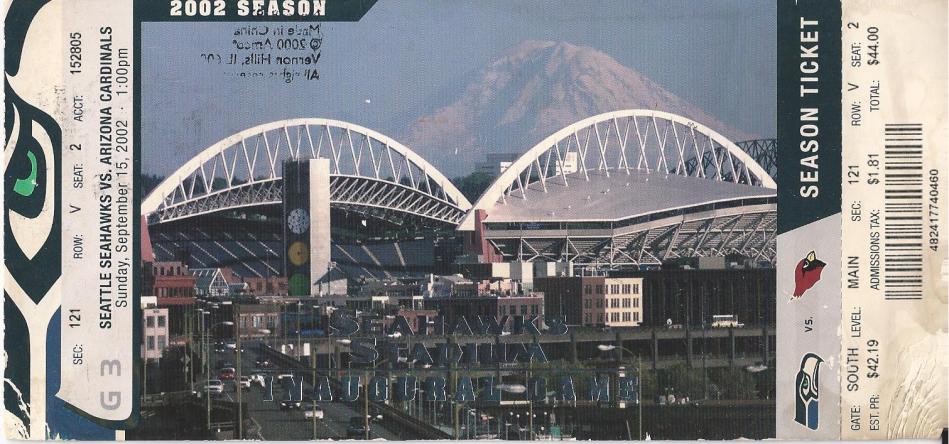
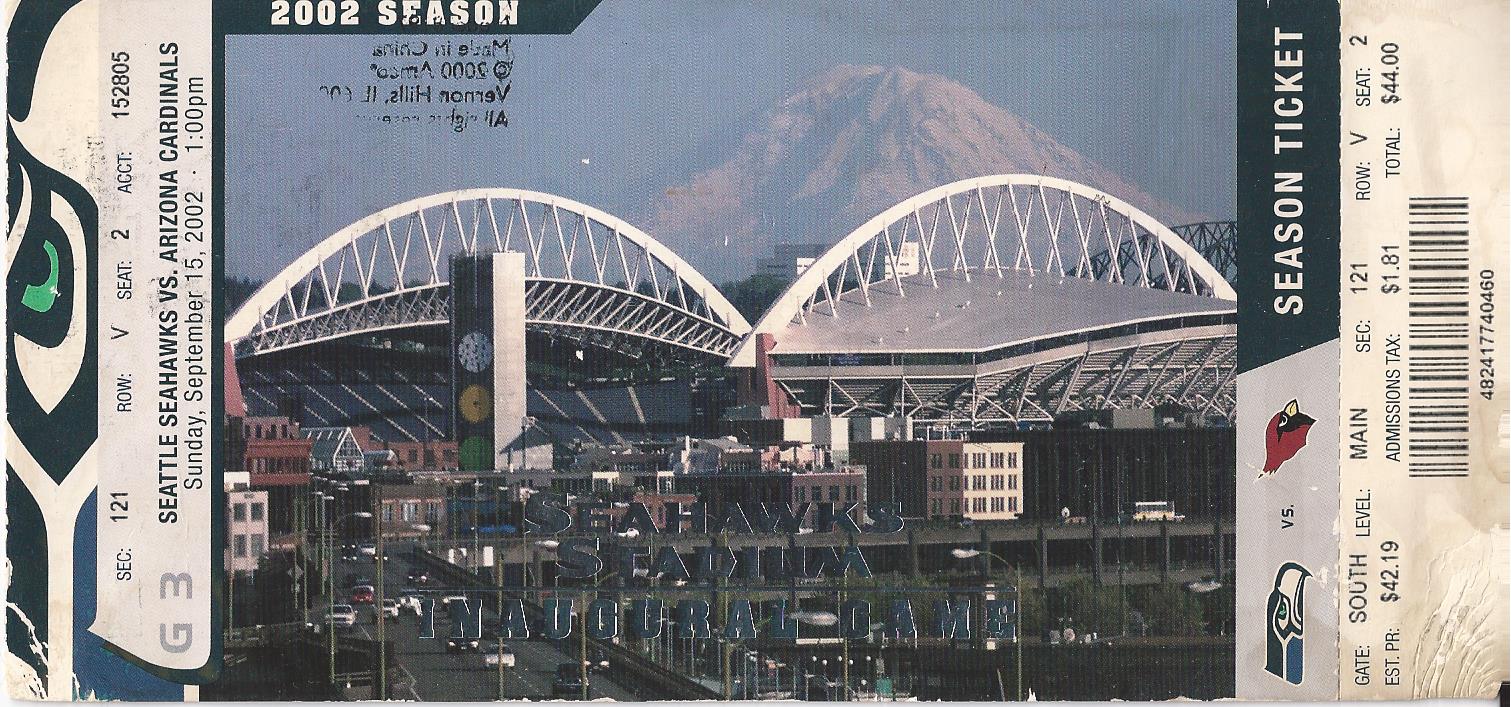
The year before I came to Japan was when the Seattle Seahawks opened their new stadium and when I first became a Seahawks season ticket holder. Prior to this 2002 season I convinced two friends the Seahawks were on the verge of turning things around and persuaded them to purchase season tickets with me. However, with my move to Japan in 2003 and after a disappointing 7-9 season, I was forced to give up my seats and my friends followed suit. Little did they realize, I was only one year off of my prediction that would see the Seahawks make the playoffs for three straight years, including a National Football Conference (NFC) best 13-3 this year (2006). With home field advantage throughout the playoffs, the Seahawks are only two home wins away from the Super Bowl. This past week was also an exciting time for Seahawk fans as running back, Sean Alexander won the National Football League’s (NFL) Most Valuable Player (MVP) award. Alexander led the NFL in rushing this season, and set a league record with 28 touchdowns, becoming the first Seahawk to win the NFL’s top honor. In 2002, I had the opportunity to meet the MVP while working public relations for the Seahawk’s stadium opening. (See below)
UPDATE: “SEAHAWKS SAIL INTO SUPER BOWL” SEATTLE (AP) – “Fans chanted “Super Bowl, Super Bowl” as Shaun Alexander carried the NFC championship trophy down the field at Qwest Stadium, a joyous trip that was 30 years in the making. Alexander, a killer defense and playing on a field where they didn’t lose this season, all combined perfectly Sunday to help the Seahawks rout the Carolina Panthers 34-14 in the NFC title game.”
* * * * *
SUPER BOWL UPDATE: “SEAHAWKS ROBBED BY ZEBRAS” – My commentary
The Super Bowl is over and Seattle lost. However, it wasn’t just me that thought this was one of the worst officiating jobs ever in a championship game! I was pissed while watching the game and now I feel a little justified. Post game reports show many sports writers across the country shared in my sentiments. It’s pretty clear, it isn’t just diehard Seahawk fans appalled about the bias officiating in this year’s Super Bowl. A Fox Sports online poll asked, “What will you remember most about the Super Bowl?” An overwhelming 55 percent said, “Questionable Calls,” with the next highest vote going to the “Steelers Trick Play,” garnering 20 percent. So how did the Seahawks gain more yards than the Steelers, lead in time of possession and win the turnover battle… and still lose? Very simple, terrible officiating, bordering on an NFL conspiracy. Has the NFL stooped to the level of the most corrupt of all sports, professional boxing? In boxing, a no-namer has almost no chance of beating a reigning champion without knocking out the champion outright, because the corporate suits running sports understand the household big names bring in the big bucks, ie: the Steelers… who now have 5 Super Bowl championships, matching San Francisco and Dallas for most in NFL history…. This Super Bowl was closer than the score indicated, and therefore one bad call could easily have made the difference in the outcome…. but it wasn’t just one against the Seahawks, several were needed to give this one to the “Stealers.” You know what I mean if you watched the game.
* * * * *
UPDATE! AUGUST 6, 2010
NFL Referee Admits Critical Mistakes in 2006 Super Bowl
RENTON, Wash. (AP) — Saying “I’ll go to my grave” with regret, NFL referee Bill Leavy reopened a Seahawks’ wound that won’t heal by acknowledging he made mistakes in Seattle’s disputed, 2006 Super Bowl loss to the Pittsburgh Steelers.
“It was a tough thing for me. I kicked two calls in the fourth quarter and I impacted the game, and as an official you never want to do that,” said the veteran of 15 NFL seasons and two Super Bowls.
“It left me with a lot of sleepless nights, and I think about it constantly,” Leavy said of the game in February 2006. “I’ll go to my grave wishing that I’d been better.”
Ringing in the New Year in Japan is very different than in the west. Although with some effort, finding a countdown party is possible, however, for most Japanese its uncommon to celebrate in this fashion. In Japan, it’s tradition to visit a temple or shrine of choice during oshogatsu, the period between January 1st to 3rd. This visit is called hatsumode in Japanese and serves as an important opportunity to pray for a prosperous New Year. Although paying your respects can be done anytime during oshogatsu, the most impressive visits are at the actual turn of the year, when large temple bells are rung at midnight. Depending on where you live in Japan, the temple in which one may visit during oshogatsu may differ. Some families may choose to visit a local neighborhood temple or shrine, while others may prefer a more prominent historical one, such as Tokyo’s Meiji Shrine, which attracts several millions of people during the three days. This year, I visited two of the most popular temples in Tokushima for hatsumode – Oasahiko Temple and Yakuoji Temple. Following in Japanese customs, I also purchased an omikuji, a New Year’s fortune written on a slip of paper. These fortunes are usually received by pulling one out randomly from a box. There are several degrees of good and bad fortunes, from a Great blessing (dai-kichi) to a Great curse (dai-kyō). The omikuji predicts the person’s chances of his or her hopes coming true, of finding a good match, or generally matters of health, fortune, life, etc. When the prediction is bad, it’s customary to fold up the strip of paper and attach it to a pine tree on the temple grounds. As for my fortune for 2006, I was lucky enough to receive a daikichi from Yakuoji Temple in Hiwasa. I guess my boys back home can rest easy as the 6-peat championship is now in the bag!
This winter vacation in Japan I finally had a chance to get back on the trail of enlightenment and finish the first of four phases on the 88 Temple Pilgrimage, known as "The Dojo of Awakening Faith." With 8 temples remaining of 23 in Tokushima, I finally finished my tour of the temples in my prefecture. This past week, I visited temples number 11-17 and 23. Having now visited the first 23 of the 88 Temple Pilgrimage, I’ll take this opportunity to reflect on my most memorable stops.
No. 12: Shozanji Temple (The Temple of Burning Mountain) – located in Kamiyama, Tokushima. Legend has it that Kobo-Daishi subdued the fiery dragon of this mountain who was causing great damage to life and property in the area. As the Daishi ascended the mountain flames threatened to engulf him, but he extinguished them by forming the Mudra of Turning the Wheel of the Dharma and finally sealed the dragon in a cave, carving two images to guard it. This temple is unique in that it’s located at an elevation 2,640 feet (800 meters) above sea level, the second highest elevated temple on the 88 Temple Pilgrimage.
No. 21: Tairyuji Temple (The Temple of Great Dragon) – located in Anan City, Tokushima. According to legend, when the first Emperor of Japan Jinmu was engaged in a unifying campaign there, a miraculous dragon image appeared believed to be the guardian of the mountain; hence the area was called Great Dragon Mountain. This temple is also called Nansho in the Awa province, because it’s located 2,000 feet above sea level, the forth highest elevated temple on the 88 Temple Pilgrimage. This temple was memorable to me due to the effort I took in hiking to its summit.
No. 23: Yakuoji Temple (The Temple of Medicine King) – located in Hiwasa, Tokushima. This temple is an extremely popular visit for residents of Tokushima during the days following each New Year, known as oshagatsu. Yakuoji Temple is known for turning aside the danger of misfortune. In Japan, it’s believed that women at the ages of 19 and 33, and men at 42 or 61, are particularly prone to back luck during these years. However, by visiting this temple at these ages, one’s ill fate can be turned aside for good fortune.
Note: The pictures below are from my trip to Shozanji Temple.